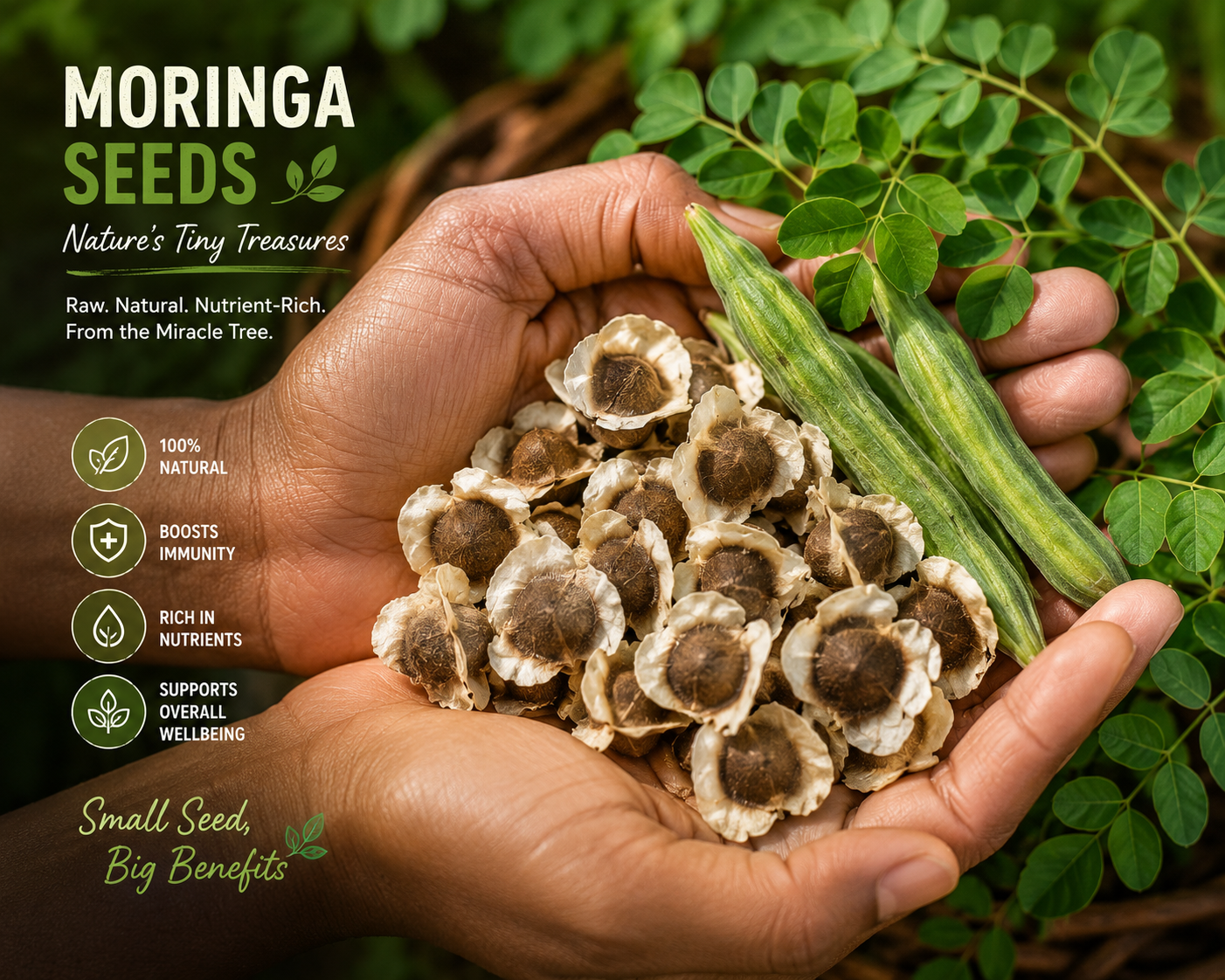
If you’ve ever looked into natural health, you’ve probably come across Moringa. Often called the “Miracle Tree” or “Drumstick Tree,” Moringa (Moringa oleifera) has been treasured for centuries in Africa and Asia for both its nutritional value and its traditional medicinal uses.
One of the most fascinating things about Moringa is that almost the entire tree is edible. The leaves, seeds, pods, flowers and even the roots have been used in different cultures for food and traditional remedies.
But what makes Moringa so special?
A Nutritional Powerhouse
Moringa leaves are among the most nutrient-dense plant foods available. They are packed with vitamins, minerals, antioxidants and protein, making them an excellent addition to a healthy diet.
Some of the key nutrients include:
- Vitamin A – supports healthy vision, skin and immune function.
- Vitamin C – helps support the immune system and contributes to reducing tiredness and fatigue.
- Vitamin E – protects cells from oxidative stress and supports healthy skin.
- Calcium – essential for strong bones and teeth.
- Iron – helps reduce tiredness and supports normal energy production.
- Protein – Moringa is one of the few plants that contains all nine essential amino acids, making it a valuable protein source, especially for those following plant-based diets.
Moringa is also naturally rich in antioxidants, including flavonoids and polyphenols, which help protect the body’s cells from oxidative stress caused by free radicals.

My Personal Experience with Moringa
I’ve been taking one teaspoon of Moringa powder daily, usually mixed into yoghurt, kefir or blended with a little ginger to soften its earthy, grassy taste (it’s definitely not my favourite flavour on its own!).
Over time, I personally noticed:
- Better quality sleep
- Improved digestion and more regular bowel movements
- More consistent energy throughout the day
Because I found it slightly relaxing, I usually preferred taking it later in the day, especially when mixed with yoghurt. Of course, this is simply my own experience, and everyone may respond differently.
Potential Health Benefits of Moringa
Research continues to explore the many ways Moringa may support overall health. While it’s not a miracle cure, it contains nutrients and plant compounds that may contribute to wellbeing as part of a balanced diet.
Rich in Antioxidants
Moringa contains vitamins A, C and E, along with powerful plant compounds called polyphenols and flavonoids.
These antioxidants help protect our cells against oxidative stress, which has been linked to ageing and many long-term health conditions.
Supports the Immune System
Thanks to its naturally high vitamin C content, Moringa may help support the normal function of the immune system.
Many people enjoy adding it to their routine during the colder months when immune support is especially important.
Helps Maintain Strong Bones
Moringa provides a rich source of calcium and magnesium, two minerals that play an important role in maintaining healthy bones and teeth.
For people who eat little or no dairy, Moringa can be a useful plant-based source of calcium.
Supports Healthy Energy Levels
Iron contributes to normal energy production and helps reduce tiredness and fatigue.
Moringa naturally contains iron, while its vitamin C content helps improve the absorption of plant-based iron, making it a helpful addition to an energy-supporting diet.
Nourishes Healthy Skin
Healthy skin starts from within.
The vitamin E and beta-carotene found in Moringa may help protect skin cells from oxidative stress while supporting normal skin health. It’s no surprise that Moringa has become a popular ingredient in many skincare products.
Supports Digestive Health
Moringa leaves naturally contain fibre, which can help support healthy digestion and regular bowel movements.
This is actually one of the main reasons I continue to take Moringa. Personally, I’ve found it very helpful for maintaining regularity. While it shouldn’t replace a fibre-rich diet, it can certainly complement one.
May Help the Body Adapt to Stress
Moringa has been studied for its adaptogenic properties. Adaptogens are natural substances that may help the body cope with physical and emotional stress.
Some research suggests they may help reduce feelings of mental fatigue, brain fog and everyday stress while supporting overall wellbeing.
Supports Healthy Vision
The vitamin A and carotenoids found in Moringa contribute to maintaining normal vision.
Since many of us spend hours looking at digital screens every day, getting enough vitamin A is one simple way to help support long-term eye health.
May Support Heart Health
Early research suggests that some of Moringa’s natural plant compounds may help maintain healthy cholesterol levels by supporting lower LDL (“bad”) cholesterol.
More human studies are still needed, but the findings so far are promising.
More Than Just Food
One of the most fascinating traditional uses of Moringa comes from parts of Africa and India, where crushed Moringa seeds have been used to help clarify and filter water. While this shouldn’t replace modern water purification methods, it highlights just how versatile this remarkable tree has been throughout history.
A Few Final Thoughts
Moringa truly deserves its reputation as one of nature’s most nutritious plants. Whether you’re looking to support your immune system, digestion, energy levels or simply increase your intake of nutrient-rich foods, Moringa can be an excellent addition to a healthy lifestyle.
As with any herbal supplement, Moringa should complement—not replace—a balanced diet and healthy lifestyle. If you’re pregnant, breastfeeding, taking medication or have a medical condition, it’s always best to speak with a healthcare professional before adding new supplements to your routine.
At Sacred Infusions, we love celebrating herbs that have been valued across generations, and Moringa is certainly one of our favourites.